
Shadi Kassem · Mr. Kassem
Why I built this
a hands-on industrial cobot program for teens
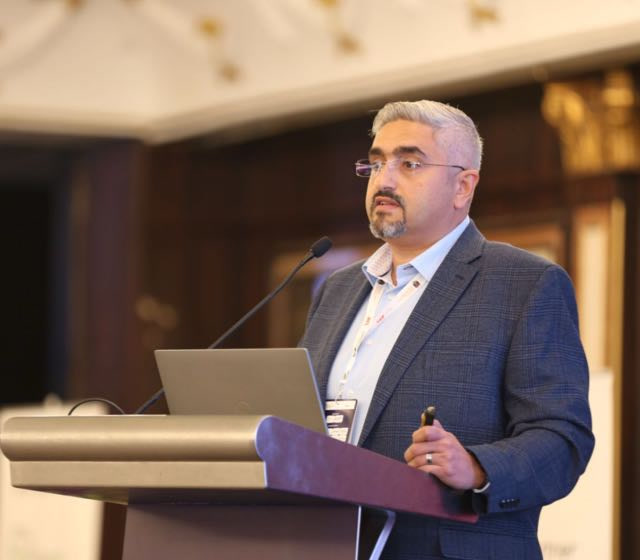
I am a parent of two boys, one in middle school and one in elementary. I built HEXKIT ACADEMY because the weekend I wanted for them, and for other kids, was not on the calendar. A parent can buy a coding camp. The student sits at a laptop, finishes something that lives on a screen, and goes home with a story about a project. That can be a good use of a summer. It is not the same as standing next to a machine that can move force.
Friends of mine who are parents of high schoolers say the same thing, and they say it more sharply. They cannot find anything with this kind of hands-on experience. Not a kit in a box. Not a lecture about a robot the class is not allowed to touch. They want a room where a teenager actually works the arm. Shops, labs, and automation cells still depend on people who have done that. Most teens never get the chance before college.
The fear at the kitchen table
Those parents are scared. They are scared AI will take jobs. They are scared that when youth finish college, they will not find a future job. My boys are not in high school yet. The parents who are already there are the ones naming this fear, and they still cannot find a place that lets a teenager touch the machine.
So I decided to give them the chance to learn and touch the future cobots used in space, the cobots doctors will use for remote surgical operations, and the cobots already doing careful, repeated work in the clean rooms of new chip and GPU plants. I want students to meet that class of machine now, with their hands on the teach pendant, instead of meeting it only as a headline.
That chance is a lesson, not a hiring promise. HEXKIT ACADEMY does not train students for space agencies. It does not train students for surgery. It does not train students for a semiconductor fab. A weekend here does not make anyone an astronaut, a surgeon, a fab technician, or a certified technician. It lets them learn what that class of machine feels like, with a safety gate first.
The problem, up close
The problem is not a shortage of activities. The problem is that the activity and the work got separated. A laptop camp trains a screen. A toy kit trains a toy. A large class trains the student who volunteered while everyone else watches. None of those is a moral failure. They are just the wrong room if what you want is the first honest rep on an industrial cobot.
Parents feel that gap as a practical question. Will this be another week my teen forgets, or will there be something to point at? A file. A video of a real arm running their program. A habit about safety that is not a poster. I did not want to answer that with a brochure. I wanted a room where the answer is the weekend itself.
What twenty years is for
I came at this from the floor. I have an electrical and electronics engineering degree and over 20 years of industrial experience. Those years are the trust asset I am willing to put my name on. They are not a list of logos, and they are not a claim that I can place your teen in a job. They are why I stay in the cell while students jog the cobot. Mr. Kassem is in the room. The arm does not run while the instructor is down the hall.
Twenty years also taught me what not to pretend. Industry does not hand a teenager a career because they attended a weekend. It does notice whether someone has been near the machine, whether they can follow a stop, and whether they can explain what their program did. That is a smaller promise. It is the one I can keep.
The mechanism
The mechanism is Cobot Foundations. One weekend. A real 6-axis industrial cobot, the kind used in a shop, not a desktop toy. Safety before motion: every student passes a safety gate, including how to stop the arm, before anyone touches it. Teach pendant time for every teen, because watching is not the lesson. The group stays small so the pendant actually comes around. Parents can drop off and pick up according to the schedule, or wait in the waiting area. We provide the equipment. Students bring closed-toe shoes, hair tied back, and no loose sleeves or dangling jewelry.
They leave with their program files, a demo video of that program on the real arm, and a Cobot Foundations certificate of completion for a portfolio. The certificate documents the weekend. It is not an accredited credential and it is not college credit. I would rather say that in the first conversation than let a parent discover it later.
I teach that weekend in the cell, beside the arm. Parents are signing up for safety, the teach pendant, a short program, and a close on the cell.
What I will not decorate
There is no partner wall on the home page. A workshop has to stand on the machine and the person teaching it. I will not publish a job-placement rate, because I do not have one to claim and one weekend should not be sold that way. I will not tell you this moves a college decision. A concrete activity can belong in an application. It is not an admission lever I control.
I also will not tell you automation is a scare story or a fairy tale. Cobots already work near people in factories, and in the clean rooms of the chip plants being built now. Future cobots are used in space, and doctors will use this class of machine for remote surgical operations. This weekend does not train a student for a space agency, for surgery, or for a fab. It does not make anyone an astronaut, a surgeon, a fab technician, or a certified technician. It lets them learn and touch that class of machine, with a safety gate first.
The desire, then the seat
What I want a parent to want is specific. Not a t-shirt. A teen who can say: I wrote this, I ran it, here is the video, and I know where my hands go when the arm moves. That is a different dinner-table story from a coding camp, and it is still a start. It is the start I wanted for my own boys, and the one my friends could not find for their high schoolers. Middle school and high school are the right time for it. Ages 11 to 18 (grades 6 to 12). No prior robotics or coding experience required. Curiosity matters more than a resume.
If that is the desire, join the waitlist. HEXKIT ACADEMY is a hands-on industrial cobot program for ages 11 to 18 (grades 6 to 12).
We confirm every date 5 days before it starts. If a date doesn't fill, you choose: move to the next weekend, house credit for any upcoming course, or a full refund.
College students ages 18 to 22 can join the waitlist for a weekend workshop. Joining the waitlist does not charge you.
Joining the waitlist does not charge you. We will email you when dates and details are confirmed.
Call (949) 414-4022 or email hello@hexkitacademy.com. If you want the longer parent questions first, start with the guides.