
Parent guide
Is a cobot used in space?
For parents of students ages 11 to 18 (grades 6 to 12).
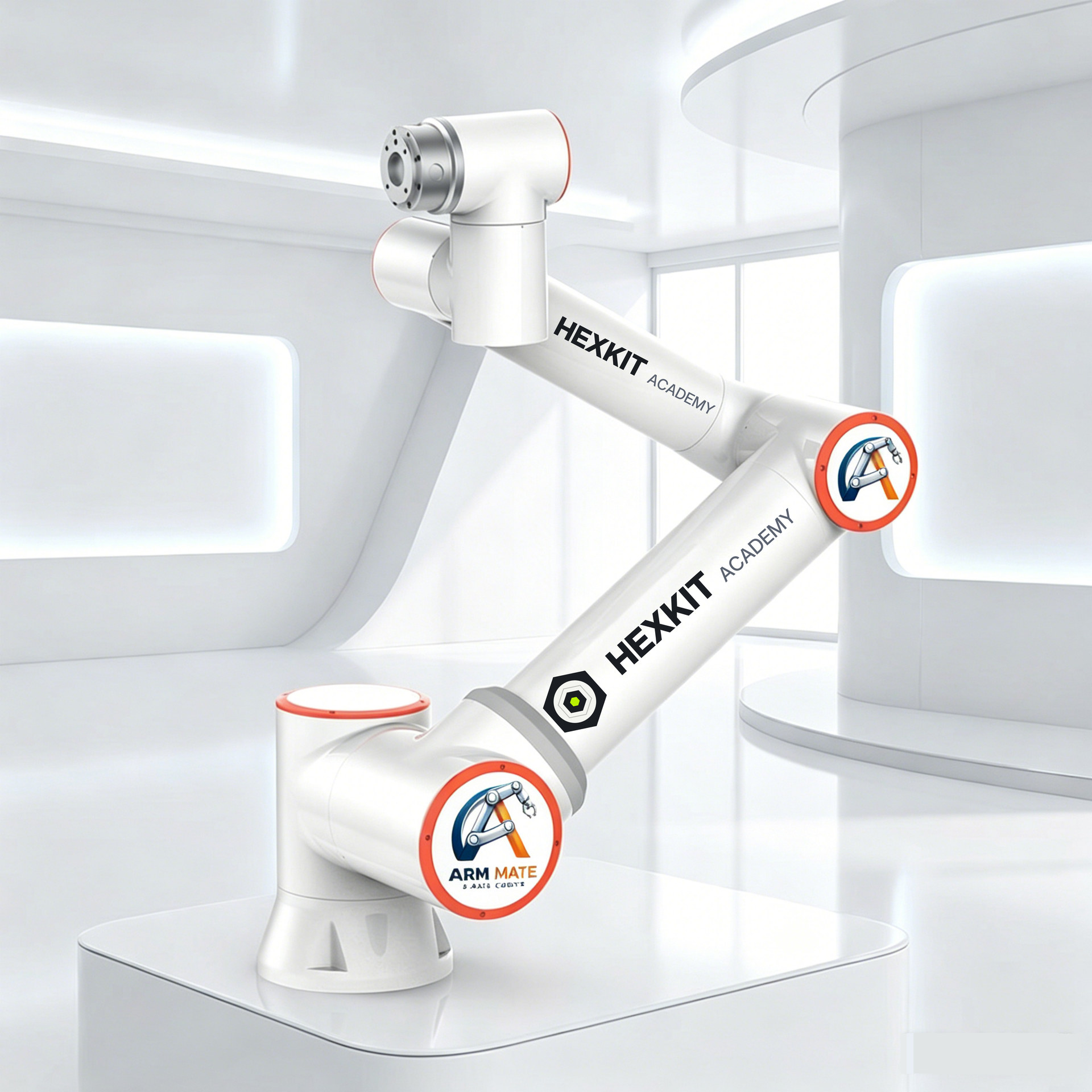
Yes. A cobot in space is a specialized system built to work alongside astronauts. The jobs are maintenance, logistics, and assembly, in microgravity and in planetary habitats. The crew still owns the judgment. The robot takes the share that is repetitive, heavy, or unsafe to do alone.
A factory cobot shares the starting idea: a robot that can work in the same space as a person. The space version is built for a different room. HEXKIT ACADEMY does not train astronauts or surgeons, and it does not have a space-agency partnership. Time on an industrial robot arm does not qualify a teenager for flight hardware. It does put a real collaborative robot in their hands.
A nearer room than orbit is a clean room. New US chip and GPU plants are a manufacturing era of their own, and they use cobots for a lot of the careful, repeated handling a person in a full suit does slowly. The class is not a fab qualification, just as it is not a flight qualification.
Three projects you can look up
Space CoBot is a research robot from the Institute for Systems and Robotics at Instituto Superior Técnico in Lisbon. It is designed to move inside a station, including interiors like the International Space Station, and to help the crew from inside the module. It flies on a hexarotor: six propellers, tilted so it can slide sideways and turn in a tight space. A 2016 IEEE paper sets out that modular design for indoor microgravity. A companion paper on personal assistance in a station studies two jobs a free-flyer could take: collecting debris that floats loose, and steadying an astronaut who has started to drift. Those papers work out the design in simulation.
Helios, from Orbit Robotics, is a microgravity machine with four arms and no walking legs. Orbit Robotics, an ETH Zurich focus project, puts it plainly: in microgravity, legs do little for getting around, so the arms move the robot, hold it in place, and handle the task. Two arms anchor it to the station walls. The other two take tools, cargo, and maintenance. The aim is crew support, so more of the day can go to science. Helios is a prototype for station interiors.
SPOCS, Safe Persistent Operations with Cobots in Space, is Motiv Space Systems' NASA project for autonomous cobots inside stations and habitats. The robots have to stay safe around people and around the hardware, including during the long stretches when a habitat has no crew. NASA's write-up uses lunar Gateway as the example: crew aboard for weeks, and robots keeping the module in working order for most of the year. A 2024 Phase I study led to a 2025 Phase II award. The aim is practical. Move repetitive work, heavy lifting, and fine handling onto the cobot, and keep the astronauts on the science.
Why a crew would want one
Safety is the blunt reason. Work outside a spacecraft is slow and hazardous. Heavy lifting inside a module has its own ways to hurt someone. A cobot gives the crew another pair of hands for those jobs.
Efficiency is the everyday version. Stations run on cleaning, tools, inventory, and cargo. Those tasks are real, and they spend hours that were meant for experiments. A helper that can fetch, hold, and tidy gives the crew those hours back.
Autonomy matters as soon as the radio delay gets long. A signal to the Moon is already more than a second each way. Mars is many minutes. Nobody in Houston can joystick every motion. The robot needs its own sensors and its own small decisions, with a person setting the goal and stepping in when the task turns strange.
Station helpers and planetary rovers
A station assistant and a planetary rover are built for different rooms. Inside a module, a tool you release does not stay put, so the robot has to fly, grip, or anchor before it can work. On the Moon or Mars, gravity returns, along with dust, rocks, and a long wait for help, so wheels and a chassis make more sense than six propellers. Microgravity changes the body of the robot. That is the useful part for a teen who likes the pictures.
What the class is
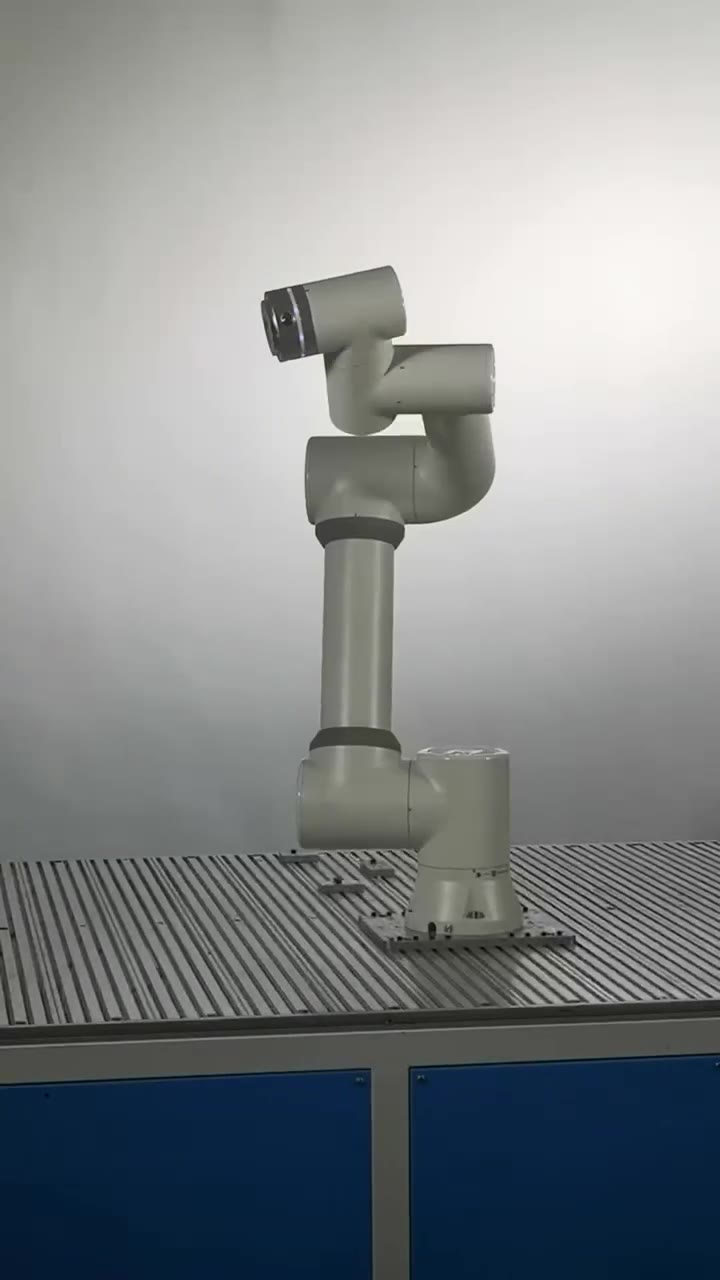
The projects above are real engineering. The classroom is a first rep on an industrial cobot. Read what a cobot is if the factory version is still fuzzy, or start at Courses. Cobot Foundations is that gate, a teach pendant, and a short program they can show. The wish to work near serious machines is welcome. A space-agency job is not something this class can hand over.
We confirm every date 5 days before it starts. If a date doesn't fill, you choose: move to the next weekend, house credit for any upcoming course, or a full refund.
Students ages 11 to 18 (grades 6 to 12): start at Courses and join the Hexkit Cobot Competition waitlist. It is a 2-hour competition. Every competitor gets hands-on time with the robot. Details coming soon. Joining the waitlist does not charge you.
College students ages 18 to 22 can join the waitlist for a weekend workshop.
Hexkit Cobot Competition waitlist
Joining the waitlist does not charge you. We will email you when dates and details are confirmed.